What We Do

Services

Every job we quote falls into one of these, from a cracked sidewalk slab to a full driveway tear-out.

Home › Services

Everything we take on

Every job below is one we do ourselves across Fairfield.

Concrete Driveways

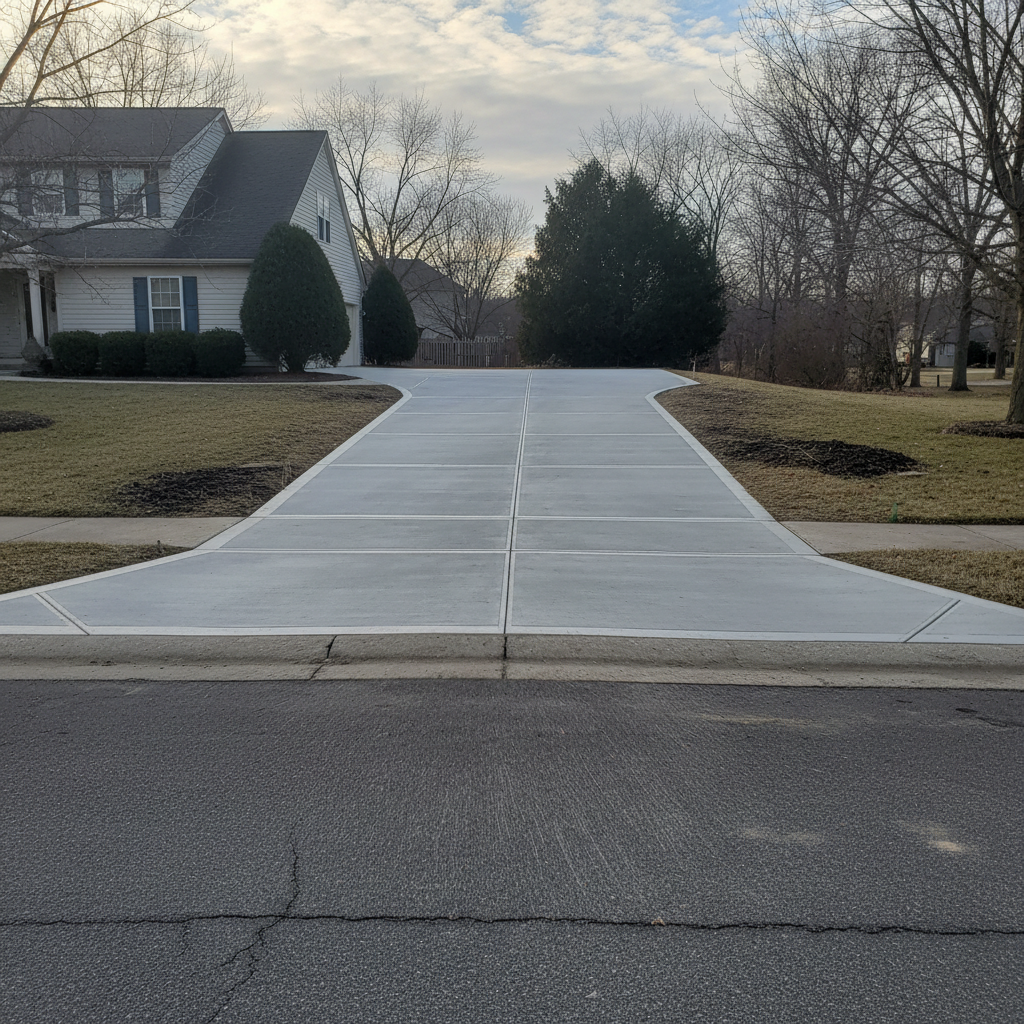
Your driveway takes more abuse than any other slab on the property, car weight, salt in January, and whatever your tires track across it. We excavate it properly, lay a compacted gravel base, and reinforce with rebar so it carries that load without cracking at the edges. Expect to stay off it for a couple days and keep vehicles off for about a week while it cures.

Concrete Patios

A patio looks simple until the water doesn't drain right and you've got a puddle by your back door every time it rains. We slope every patio pour about a quarter inch per foot away from the house, and we control the joint spacing so cracks happen in straight lines instead of wherever they feel like it.

Stamped Concrete

Stamped concrete gets you the look of flagstone, brick or slate without the weeds that come up between real pavers. We color and texture it while the slab is still plastic, then seal it once it's cured so the color holds through Ohio winters.

Concrete Repair

Cracked steps, a sunken slab by the garage, spalling on the porch, we see all of it. Small cracks can often be routed and filled, but a slab that's heaved or settled usually needs mudjacking or a partial replacement. We'll tell you straight which one your situation actually needs instead of upselling a full tear-out.

Concrete Slabs

Garage floors, shed pads, hot tub pads, AC unit pads, if it needs a flat, level surface to sit on, we pour it. Thickness and reinforcement change depending on what's going on top of it, a shed pad doesn't need what a garage floor needs.

Concrete Sidewalks

Sidewalks take a beating from foot traffic, lawn equipment, and tree roots pushing up from underneath. We cut them into proper panels with control joints so any future cracking stays contained to one section instead of running the whole length.

Concrete Steps & Porches

Front steps are usually the first thing people notice is wrong with a house, a chipped edge or a step that's started to lean. We form and pour new steps to match your existing rise and run, or rebuild a porch slab that's pulling away from the foundation.

Exposed Aggregate Concrete

Exposed aggregate gives you a non-slip, textured finish by washing the surface back to expose the stone in the mix. It holds up well on pool decks and walkways where plain broom-finish concrete gets slick.

Concrete Foundation Repair

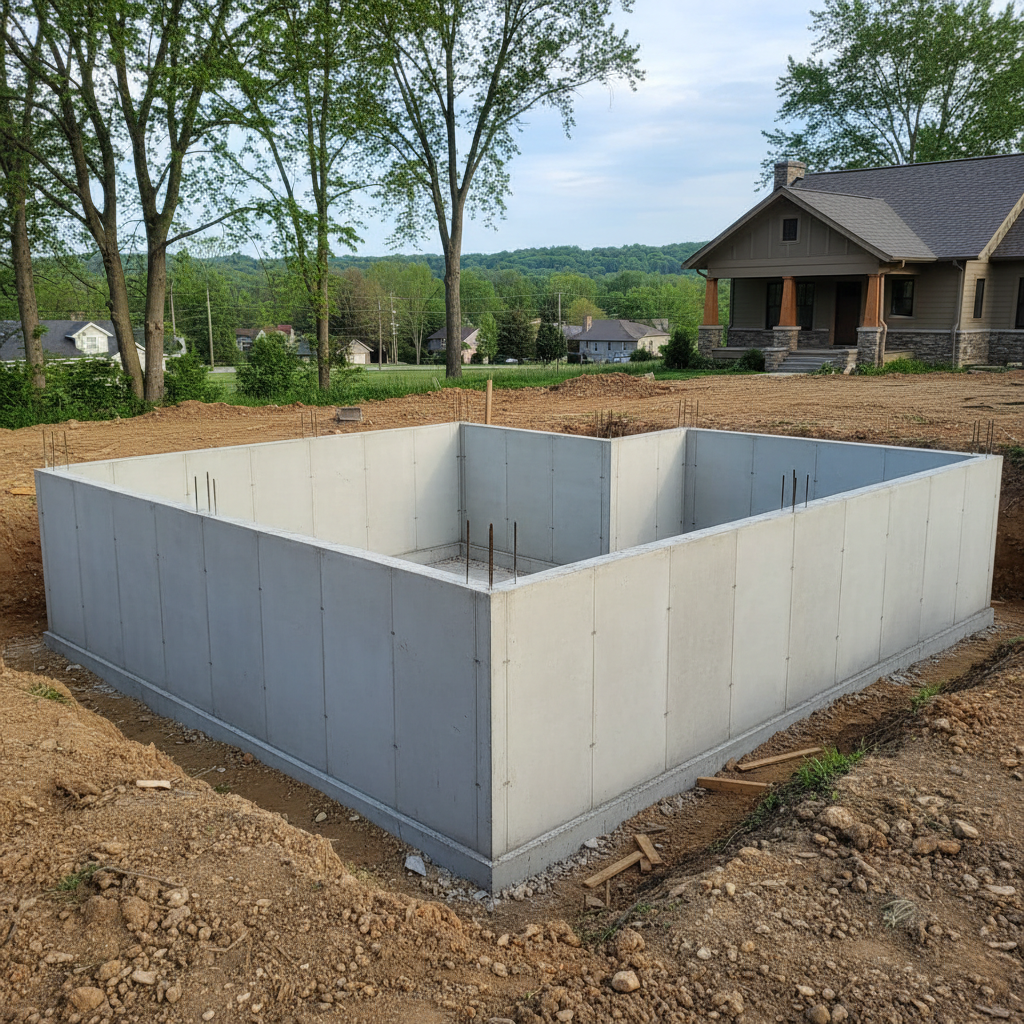
A crack in your foundation wall can mean anything from normal settling to a real structural problem letting water in. We patch and seal hairline cracks, and for anything wider than a pencil, we look at what's actually moving before we recommend a fix.

Retaining Walls

Clay soil on a slope doesn't stay put, and a retaining wall built without drainage behind it just fails a few years later. We build block and poured concrete retaining walls with gravel backfill and drain tile so water pressure doesn't push the wall over.

How It Works

Four steps, and no surprises in any of them.

01

We come and look

You tell us what you want doing, we look at what is actually there, and we ask the awkward questions early.

02

You get a price

In writing, itemised, free. If something might add cost later we flag it now rather than at the end.

03

We do the work

Same crew throughout. We cover your floors, keep the dust down and tidy up before we leave each day.

04

We walk it with you

You point out anything you are not happy with and we fix it before the invoice, not after.

Where We Work

All of this, across Fairfield, OH

We bring the crew and the concrete truck to these communities around Fairfield.

Fairfield, OH
Cincinnati, OH
Hamilton, OH
Middletown, OH
West Chester, OH
Mason, OH
Lebanon, OH
Oxford, OH
Springdale, OH
Monroe, OH
Trenton, OH
Common Questions

Things worth asking

Questions that come up once a project is actually scheduled.

Do I need a permit for a new driveway or patio?
Many municipalities require a permit for a new driveway apron where it meets the public street, and some require one for patios or slabs over a certain size. A concrete contractor familiar with the local jurisdiction typically pulls the permit and schedules the required inspection as part of the job.
How long does a typical concrete pour take to complete?
A standard driveway or patio pour usually takes one to two days for the actual forming and pouring, though prep work like excavation and grading can add a few more days before that. The concrete itself takes about 24 to 48 hours before foot traffic and roughly 7 days before it's ready for vehicle weight.
Can a concrete project be scoped to fit a specific budget?
Yes, a concrete contractor can usually adjust the scope, like slab size, finish type or reinforcement, to fit a stated budget. Decorative options like stamping or exposed aggregate cost more than a standard broom finish, so cutting those first is often the easiest way to bring a price down.
Do you offer any kind of guarantee on the work?
Reputable concrete contractors typically back their work with a workmanship warranty covering issues like improper curing or installation defects, separate from normal concrete cracking, which is expected over time. It's worth asking for the specific warranty terms in writing before the job starts.
Who will I be dealing with during the project?
On most concrete jobs, a single point of contact, often the crew lead or project manager, handles scheduling, answers questions during the pour, and walks the finished job with the homeowner. Getting that person's direct contact information upfront makes it easier to reach someone if a question comes up mid-project.
What's the difference between rebar and wire mesh reinforcement?
Rebar is a steel bar tied into a grid and supported on chairs so it sits in the middle of the slab where it does the most good, which makes it the stronger choice for driveways and anything carrying vehicle weight. Wire mesh is cheaper and fine for lighter-duty slabs like sidewalks, but it has to be lifted into position during the pour or it sinks to the bottom and does almost nothing.
Can I still live in my house during the work?
Yes, concrete work is almost always exterior, so it doesn't typically disrupt living inside the house, though a driveway replacement will block vehicle access to the garage for several days. Planning an alternate place to park during the pour and cure time avoids any inconvenience.
What should I do to prepare the site before the crew arrives?
Clearing the work area of vehicles, furniture, potted plants and anything stored near the slab location before the crew arrives speeds up the job. It also helps to flag any buried sprinkler lines, invisible dog fences or shallow utilities the contractor might not already know about.
What happens if you run into something unexpected once the old concrete is removed?
Unexpected issues under old concrete, like poor soil, a broken drain pipe, or an undocumented utility line, come up often enough that a good contractor should flag it before pouring over the problem. This usually means a short pause and a revised price for the extra work before the pour continues.
How do I take care of new concrete after it's poured?
New concrete takes about 28 days to cure before it reaches full strength, so it's best to avoid heavy loads, like a moving truck or dumpster, during that window. Sealing the surface every few years and keeping deicing salt off it through the winter both help it last longer without surface scaling.

Not sure what you need?

Describe the problem and we will tell you what it probably is. No obligation.

Call (513) 643-1650